
In the Arid and semi-arid lands of Laikipia, where seasons are often marked by thirst rather than rainfall, a silent revolution has been brewing, one that is changing how communities understand, engage with, and act on climate challenges.
The just concluded Climate Democracy Accelerator (CDA) project, funded by People Powered, has not only equipped communities with the tools of participatory governance but has also ignited a shared vision: water security for all.
But this is not just a story about training workshops and Ward Committee meetings. It is a story of transformation from silence to voice, from exclusion to inclusion, and from passive governance to people-powered advocacy.
The Power of Process: Crafting the Rainwater Harvesting Advocacy Brief
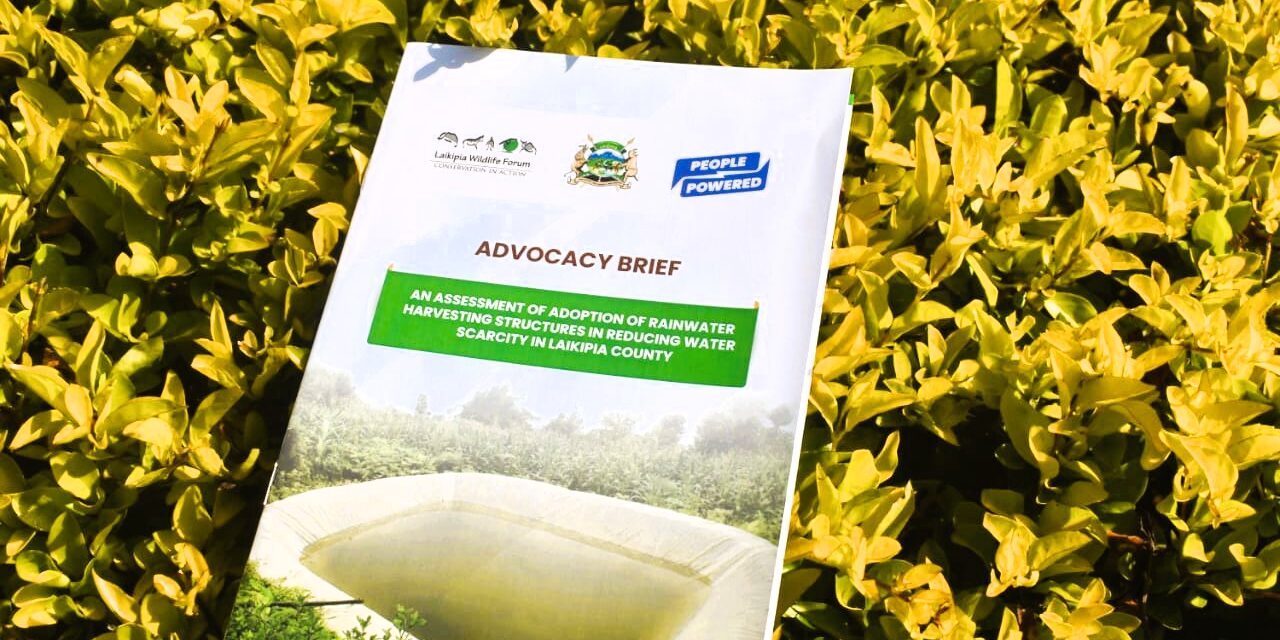
In April 2025, we reached a significant milestone with the final validation of Laikipia’s Rainwater Harvesting Advocacy Brief. The true distinction of this brief lies not only in its technical recommendations or policy objectives, but in the inclusive and collaborative process through which it was developed.
The brief was developed with the community, by the community, through the tireless efforts of the 15 Ward Climate Change Planning Committees (WCCPCs), supported by LWF, the Laikipia Climate Change Unit, and partners such as Pathways Policy Institute, the Kenya Forest Service (KFS), and the Water Resources Authority (WRA).
From Mukogodo to Marmanet, Salama to Sosian, WCCPC members: men, women, youth, and persons with disabilities, came together to identify the pressing issue of water scarcity and propose tangible, localized solutions.
“This is the first time our voices are shaping county policy, not just receiving it,” said Madam Alice, Chair person of WCCPC from Ngobit Ward, during the final validation session.
The process wasn’t without its challenges. At the start of CDA, most WCCPCs lacked training on climate change or their roles in the FLLoCA (Financing Locally-Led Climate Action) program. The journey ahead seemed unclear. But through intensive capacity building, participatory planning, and advocacy training, WCCPCs grew into confident leaders and advocates. They led citizen assemblies, gathered data, and co-developed action plans that would eventually feed into the advocacy brief.
From tree nurseries in Nanyuki to solarized boreholes in Githiga, and beekeeping in Mukogodo West to household water pans in Umande, every Ward told its story of innovation and resilience. These local actions formed the backbone of the policy brief, proving that community knowledge is not only valid, it is vital.
As we celebrate this milestone, LWF recognizes that building policy is only half the battle. What we need now is implementation.
We envision a second phase of this project, one that brings the advocacy brief to life through implementation of this structure and having the proper structure at the right place to be able to harvest water for the community.
With your partnership, we can turn grassroots advocacy into government-backed action. We can make rainwater harvesting not just an idea, but a way of life for Laikipia.
Rain may be seasonal, but community resilience does not have to be. Let’s build a Laikipia where every drop counts, and every voice matters.


