
Give young people a real chance to connect with nature and their creativity becomes a genuine voice for conservation. That was clear this quarter when 18 students from 14 Laikipia Wildlife Forum (LWF) Conservation Education schools placed among the national winners and Top 100 finalists in the 2026 AFEW Kenya Giraffe Centre Annual Environmental Awareness Competition, putting the Greater Laikipia Landscape squarely on the national conservation education map.

A student feeds a giraffe from the raised platform at the AFEW Kenya Giraffe Centre in Karen.
Held under the theme “Partnerships in Conservation for Healthy People and Planet,” the competition challenged learners to explore the relationship between people, wildlife, and the environment through art and essays. For months before the awards, LWF’s Conservation Education team worked with schools, students, and environmental club patrons to help turn ideas about conservation into strong creative entries. It paid off: 18 learners from schools across Laikipia, Meru, and Nyeri counties earned national recognition out of thousands of entries submitted from across Kenya.
The win was celebrated with a two-day trip to Nairobi on 18 and 19 June 2026, made possible by generous financial and logistical support from Loisaba Conservancy. That support mattered most for students travelling from remote areas like Dol Dol in Laikipia North, opening up an opportunity that would otherwise have been out of reach. LWF is grateful to Loisaba Conservancy for investing in these young conservation champions and for deepening its partnership with LWF around conservation education.
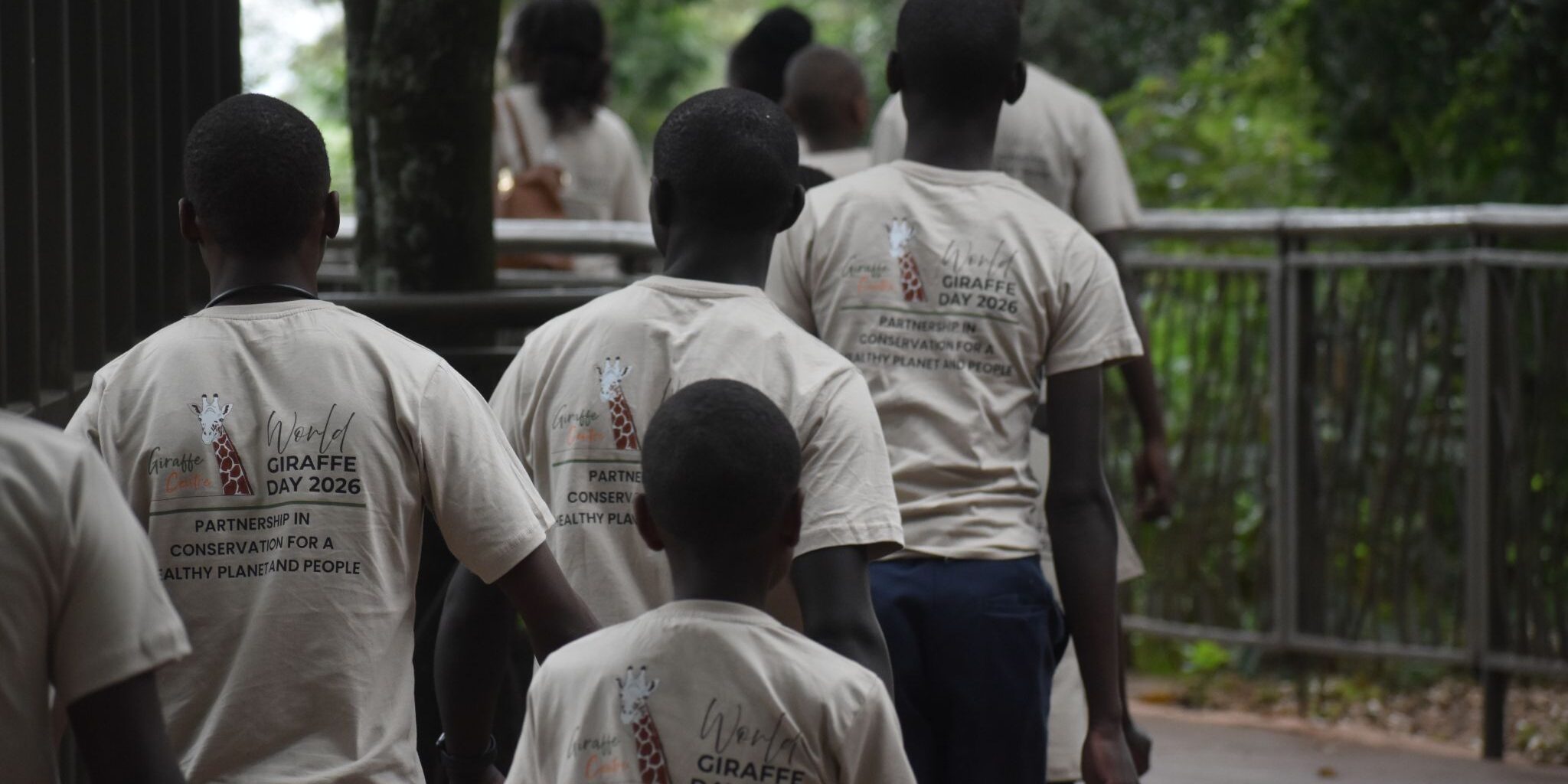
The journey itself turned into part of the learning. After travelling in from different corners of the landscape, students spent their first night at St. Francis Little Sisters in Kasarani before heading to the AFEW Kenya Giraffe Centre in Karen the next morning. For many, it was their first trip to Nairobi and their first time up close with a giraffe. Feeding giraffes from the raised platforms turned classroom lessons into something real: they learned about Rothschild’s giraffes, giraffe ecology and behaviour, habitat protection, and the role people play in protecting wildlife.
From there it was on to the Kenya School of Law, where the national awards ceremony and World Giraffe Day celebrations brought together conservation organisations, schools, government agencies, and environmental partners. LWF ran its own exhibition booth featuring the Nexus Dicey conservation game, wildlife skulls, Laikipia maps, environmental calendars, banners, and conservation publications, a chance to show how creative, hands-on learning makes conservation stick with young people.

Students explore the wildlife skulls and conservation calendar display at the Kenya School of Law exhibition.
Then came the moment they had all worked for. One by one, the 18 young champions walked up to receive certificates, Giraffe Centre backpacks, and awards for their work. It was proof that conservation education builds more than knowledge about the environment. It builds confidence, creativity, and leadership.

St. Moses Primary School students receive their Certificate of Merit on stage during the AFEW Kenya Giraffe Centre awards ceremony
Competitions like this matter beyond the prizes. They give children a platform to find their voice and see themselves as part of Kenya’s conservation story. Exposing learners to conservation early helps build a generation that understands wildlife, healthy ecosystems, and human wellbeing are tied together, and it puts young people in the same room as conservation practitioners and wildlife institutions, well beyond anything a classroom can offer.
The success of these 18 students belongs just as much to the 14 schools, teachers, environmental club patrons, families, and conservation partners who backed them. It is also proof of what becomes possible when conservation organisations choose to work together.
LWF thanks Loisaba Conservancy for its generous KSh 200,000 contribution, which made the trip possible and AFEW Kenya Giraffe Centre, Kenya Wildlife Service, WWF Kenya and all participating schools and teachers for their support of environmental education. The next step is to keep the momentum going through school mentorship, conservation education, competitions, learning trips, and stronger partnerships.
Somewhere among these 18 young champions, Kenya may have already found its next generation of conservation leaders. Conservation doesn’t wait for a child to become an adult. It begins the moment a child is given the chance to care, explore, create and believe their voice matters.


